
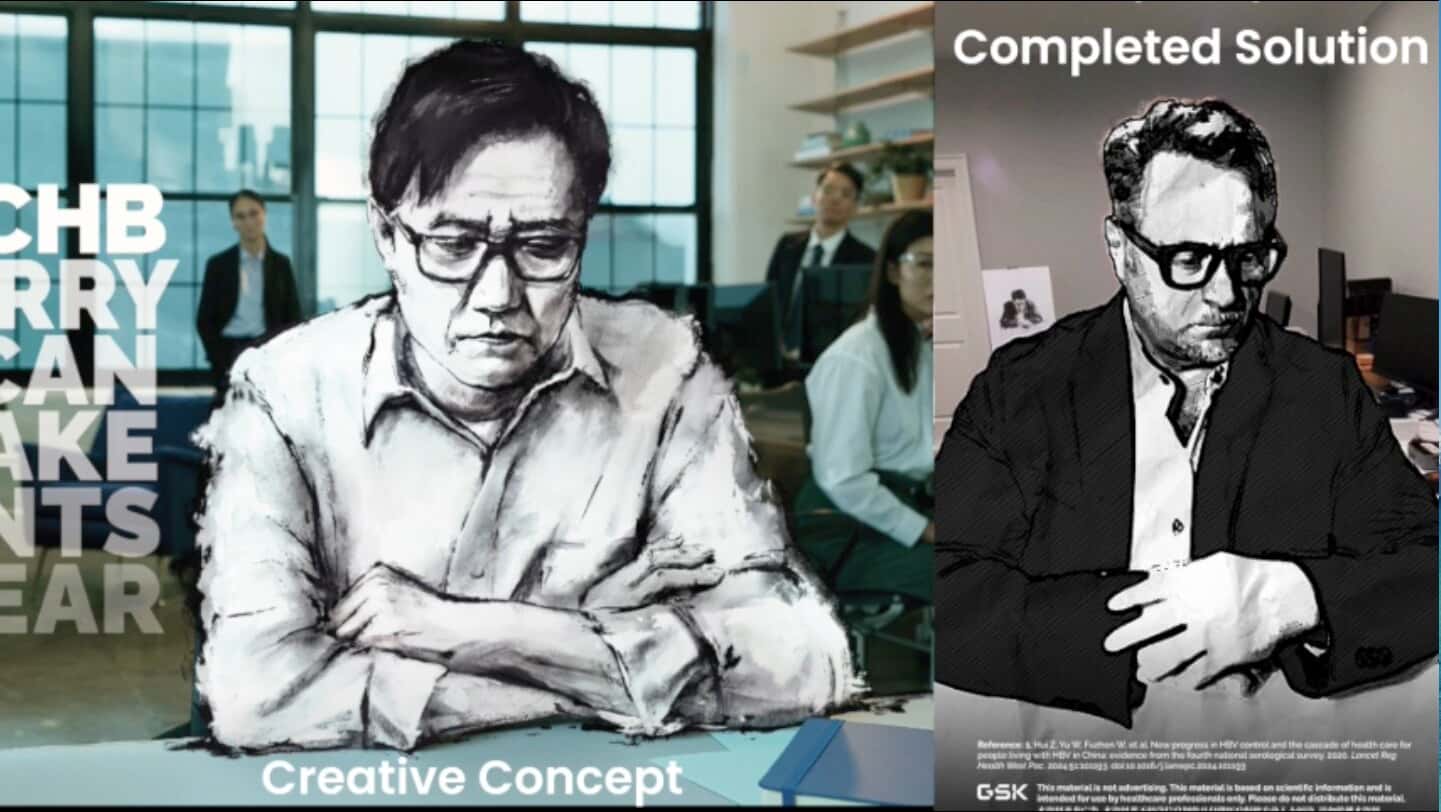
For GSK’s APASL 2025 project, the goal went beyond attracting a crowd: it was to help healthcare professionals feel what living with chronic hepatitis B (CHB) can be like. Working alongside GSK’s agency, our team built “Isolation,” a real-time augmented reality effect that redraws anyone who steps in front of the camera as a black-and-white charcoal sketch.
As a pharma experiential marketing agency, we aim for experiences where the technology serves the message. Isolation is a good example: a visitor sees themselves transformed on screen, and that single image carries the story.
The brief called for a custom real-time effect, built on Microsoft Azure Kinect technology, that would represent the isolation patients with CHB experience. It also had to highlight the social, physical and emotional impact of the disease.
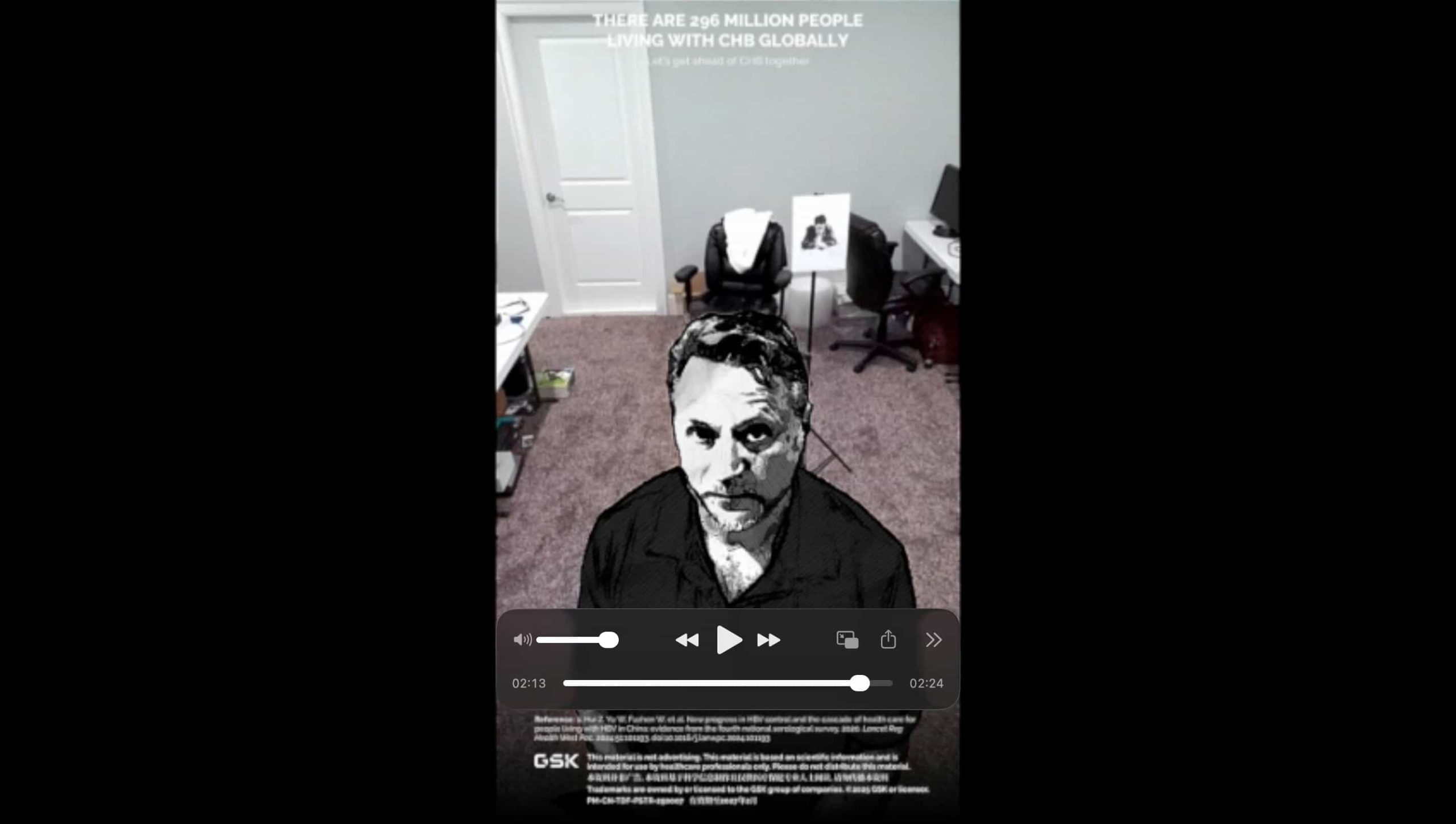
The experience carries GSK’s own framing throughout. Its headline notes that 296 million people live with CHB globally, and every frame includes GSK’s footer stating the material is intended for healthcare professionals only. A statistic like that is easy to scan past. Seeing yourself redrawn in charcoal is much harder to ignore.
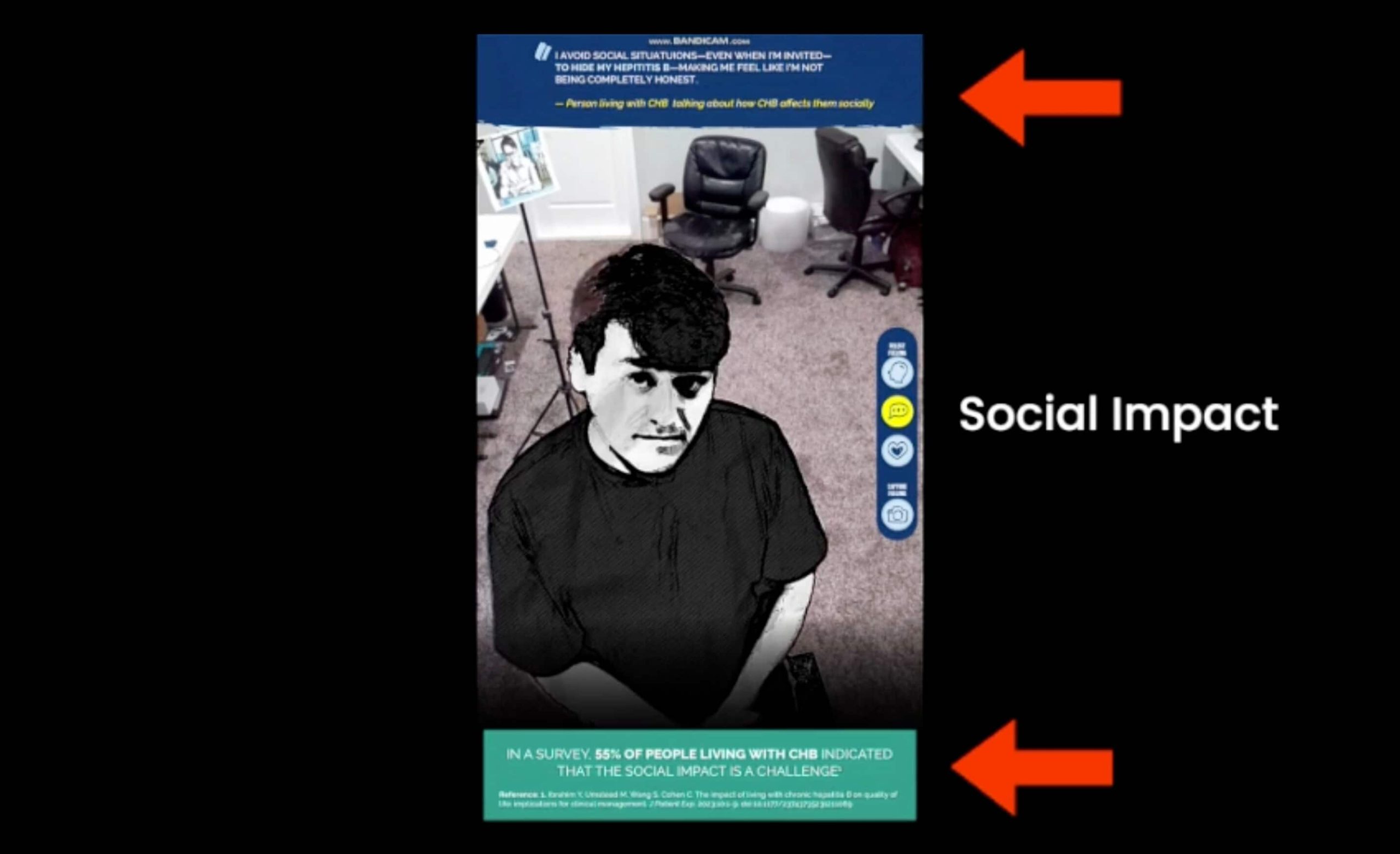
The creative concept fits in a single frame: a man drawn as a loose charcoal sketch, arms folded, while the colleagues around him stay in full color. He is in the room, yet clearly set apart.
The finished experience carries that visual language into live interaction. A visitor’s portrait is redrawn as a high-contrast ink illustration with fine hatching, while the real room behind them stays recognizable. The contrast between the sketched figure and the world around it is what communicates isolation, without a single line of explanation.
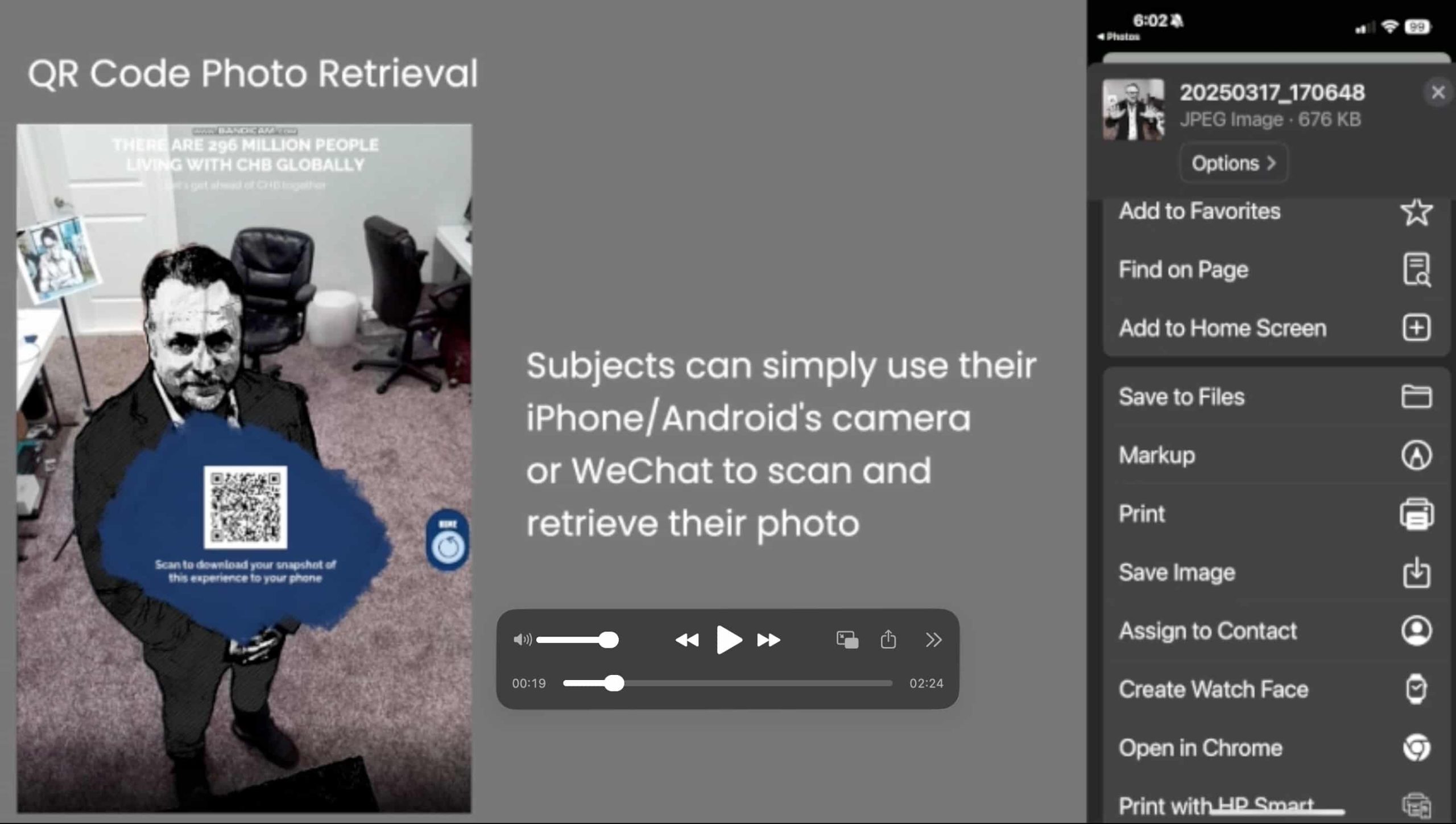
Visitors move through five simple steps at a portrait-format touchscreen:
That last step works like a custom photo booth, except the keepsake is a portrait that carries the campaign’s message back to the visitor’s own phone.
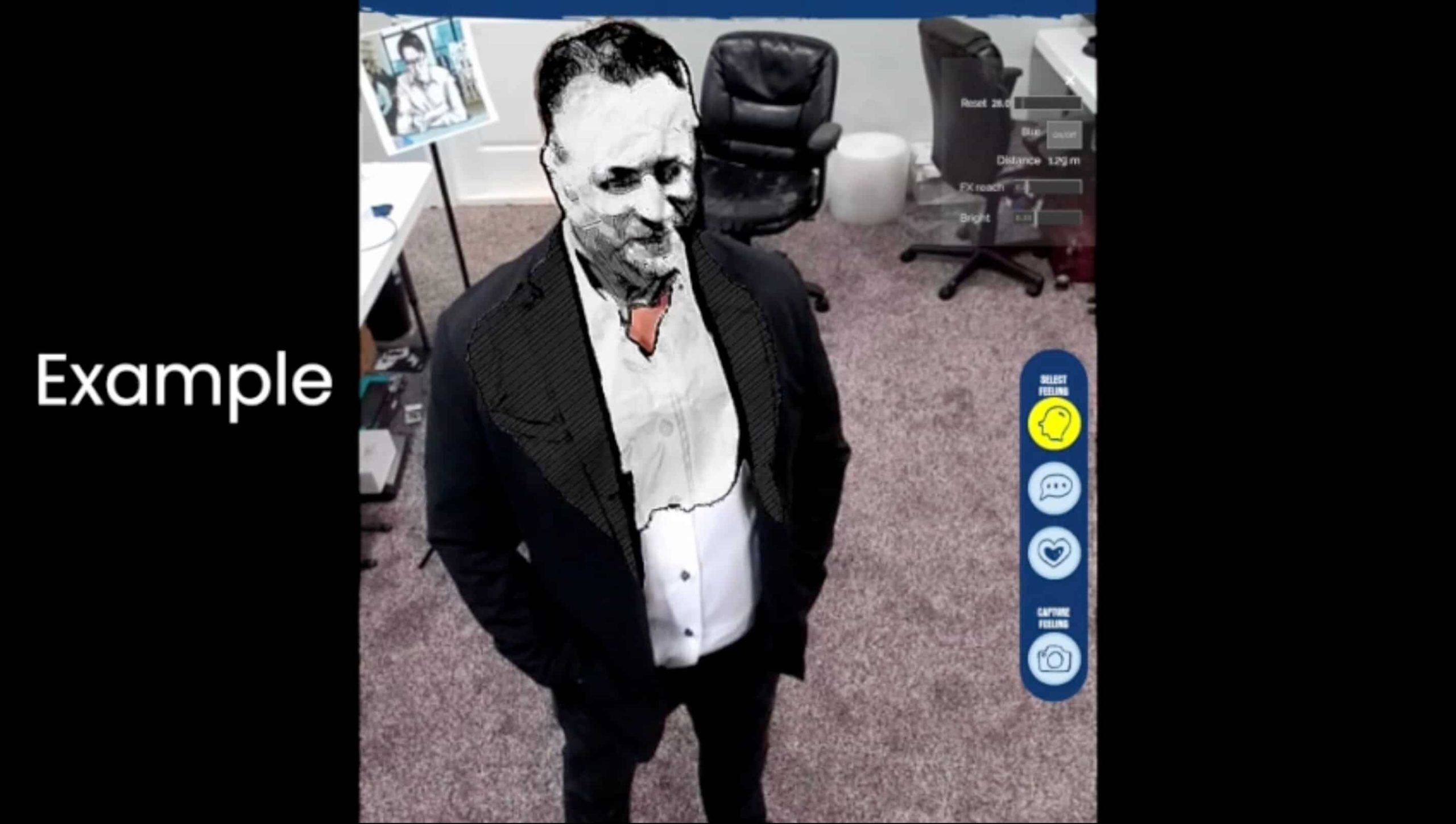
Isolation runs on Microsoft Azure Kinect, a depth-sensing camera, which lets the effect treat the visitor differently from the room behind them. Seeing yourself transformed live on screen is the same principle behind our augmented reality mirror experiences.
Booth conditions vary, so we added a control panel, opened from the top right of the screen, for tuning the effect before the event:
A few setup details we documented for the team: the camera mounts at the top of the touchscreen, test captures were taken with the Kinect at a 62-inch height, and we provided training manuals and walkthroughs. For dim halls, small 4″ x 5″ LED lights, powered by battery or USB, can be added to the kiosk.
Four choices made Isolation work, and each applies to other healthcare activations:
For more ideas, see our guide to pharmaceutical experiential marketing engagement strategies.
If you want a booth experience that makes a complex patient story felt rather than just read, we would like to hear about it. Get in touch with our team to explore augmented reality concepts built for your audience, your venue and your compliance requirements.