
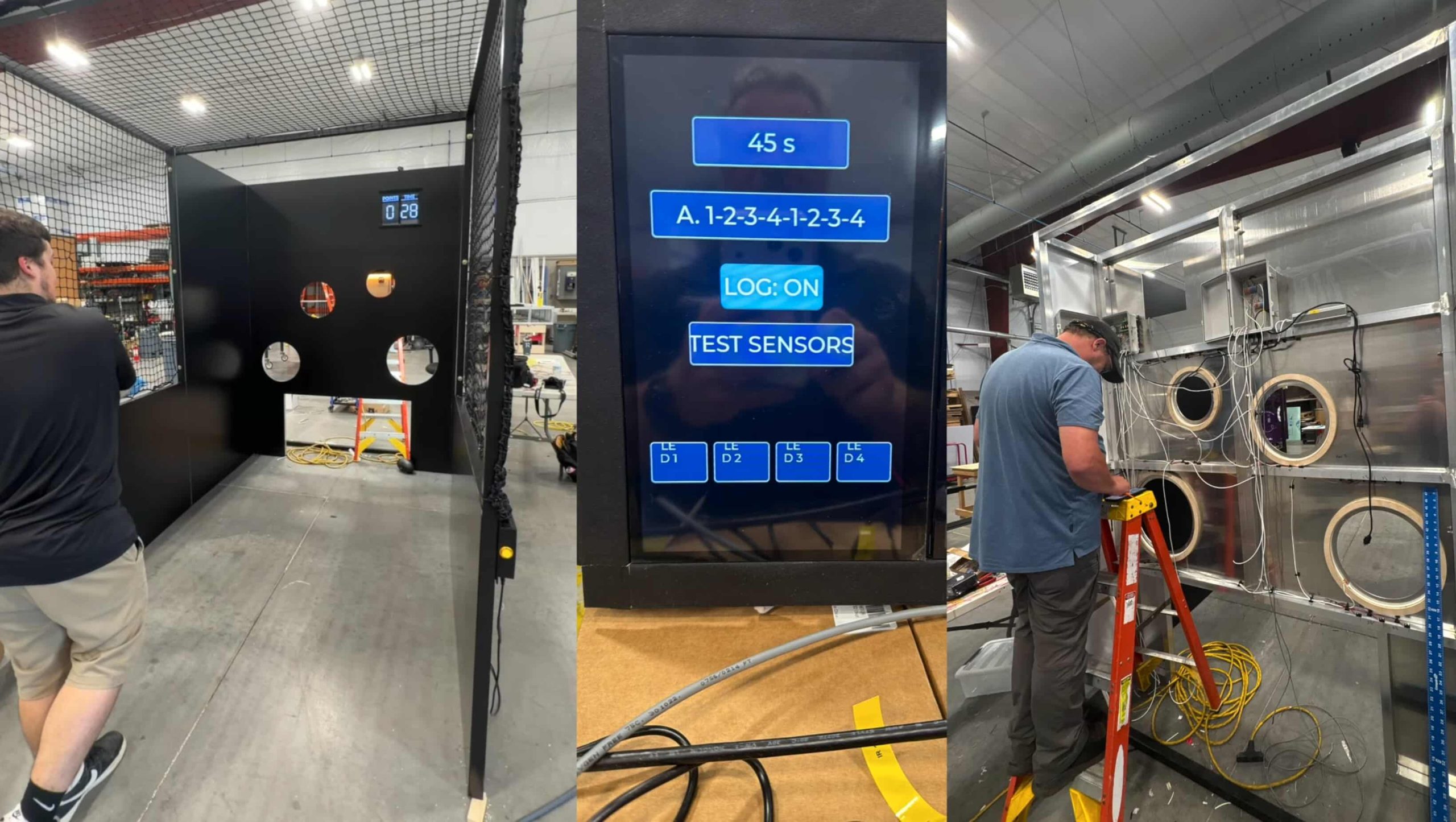
Two weeks isn’t much time to develop a custom interactive experience. It’s even less time when that experience has to travel across the country, run outdoors at college football venues, handle changing weather, stand out in full daylight, take continuous football throws, and stay simple enough for a touring event team to operate weekend after weekend.
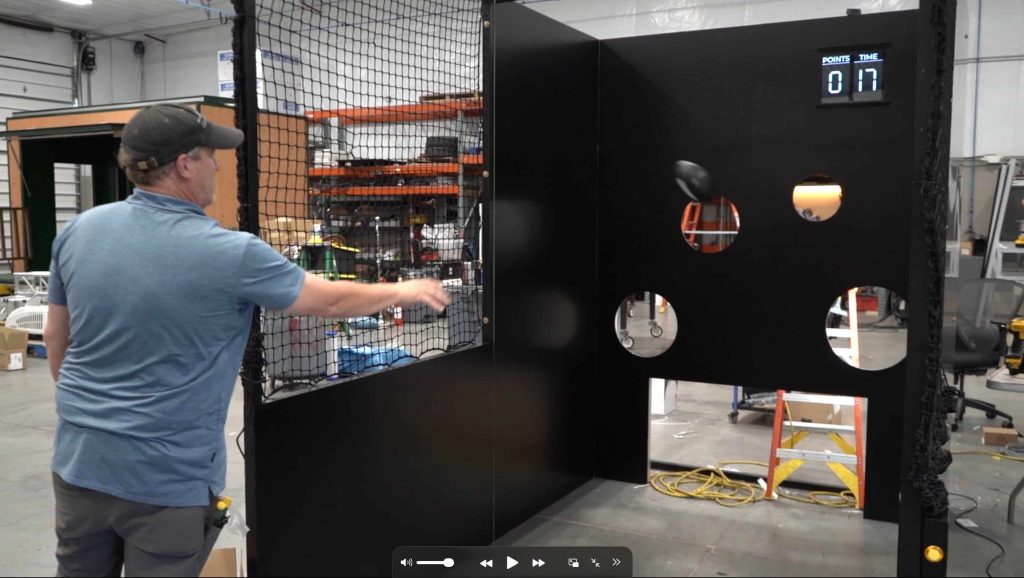
That was the challenge behind a recent addition to the CELSIUS LIVE FIT college football tour. The agency had a high-level vision for a football-themed game with the pull and competitive energy of an arcade experience. CELSIUS wanted something that would appeal to its core college audience while staying approachable for families and fans of virtually any age.
With roughly two weeks before the first activation, a longtime fabrication partner brought Elation Brand Engagement Solutions into the project as its experiential technology partner. The assignment was easy to describe and much harder to execute: turn the concept into a reliable electronic game that could travel. It’s a good example of what a custom branded game looks like when engineering, fabrication and a tight schedule have to work as one.
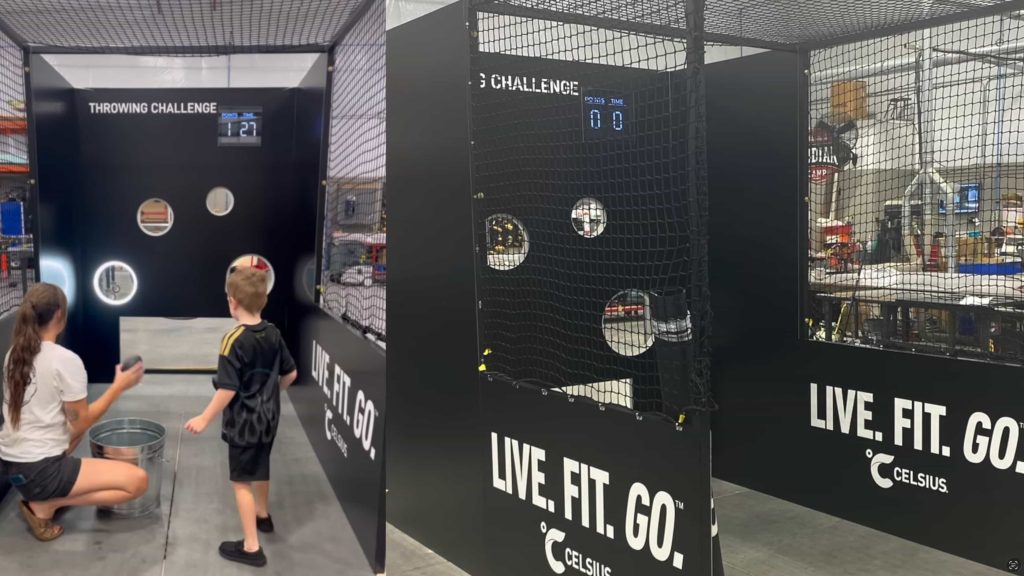
Some of the most effective experiential games don’t need instructions. The CELSIUS Football Toss gives players four illuminated targets of progressively smaller sizes. While the countdown clock runs, players throw footballs through the active target to score. Larger targets are easier and worth fewer points. Smaller targets are harder and worth more, with the electronic scoring system awarding between one and five points. Hit the target, score, and watch the next one light up until time expires.
Large seven-segment displays keep the countdown and score visible to the player and to everyone watching. High-output LED lighting around each target makes the game noticeable even in daylight, so spectators understand what’s happening at a glance. It’s the classic arcade dynamic: easy to understand, difficult to master, and competitive enough to earn another turn. That formula fits sports experiential marketing well, because the crowd is already in a competitive mood.
Four weekends into the 2026 college football season, the tour team is seeing lines from pregame opening through kickoff, with college students, families and fans waiting for their turn.
Creating the guest experience was only half of the engineering challenge. A touring activation lives a very different life from an installation sitting permanently inside a building. Every week it’s packed into a truck, transported to another city, unloaded, assembled, operated outdoors for hours, broken down and loaded again. That’s the daily reality of mobile brand activation, and it shapes every design decision.
Elation and our fabrication partner therefore designed the physical structure and the electronics together. The footprint had to stay relatively small, fit the transportation plan, and go up within a roughly three-to-four-hour load-in window.
The solution is a three-wall modular structure built around a custom aluminum framework, with weather-resistant fabric and ball-containment netting. The walls bolt together onsite. Much of the technology travels inside the structure instead of being added after assembly: wiring is routed through the aluminum framework, components sit inside weather-resistant enclosures, and the sensors, displays and target lighting are integrated into the game itself. Once the structure is up, the crew connects it, applies power and plays.
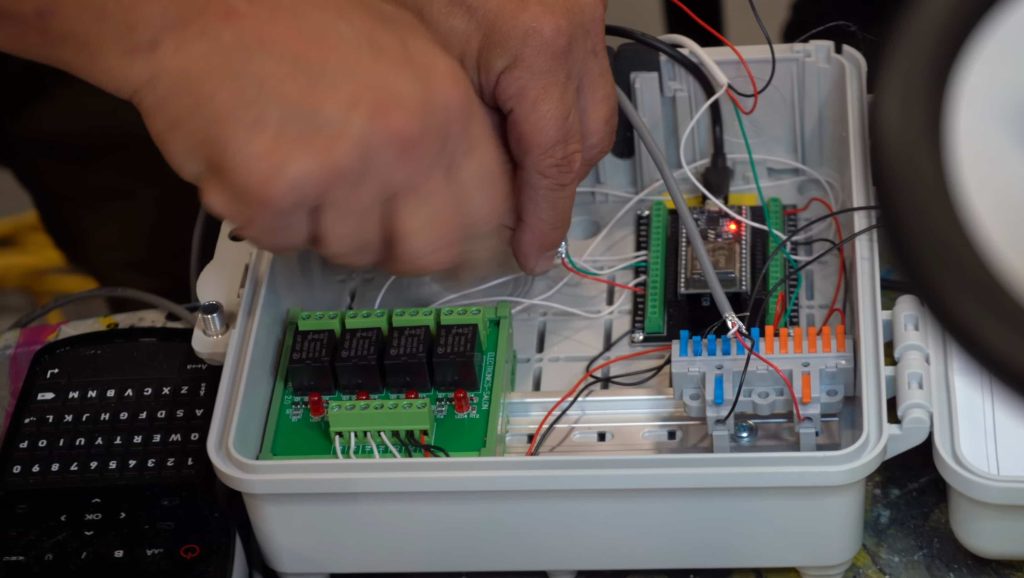
One of the less visible decisions on this project was also one of the most deliberate: the CELSIUS Football Toss doesn’t depend on a traditional PC. We architected it as a dedicated electronic system that controls the game logic, target sensors, high-output LED lighting, timer, scoring and displays.
A PC-based interactive is often the right solution. Sophisticated graphics, large-format video, AI, augmented reality and complex touchscreen experiences can justify the extra computing infrastructure. This wasn’t one of those situations. For a nationwide tour, dedicated electronics meant no operating system to boot, no application to launch, no monitor configuration, no login and no unexpected software update. The system behaves more like an appliance than a computer. Power it up and it’s ready to play.
Great experiential technology should be exciting for the guest and boring for the operator. Plug it in, turn it on and let it run.
If you’re planning a purpose-built physical game, take a look at our custom hardware claw machine.
Taking the game outdoors created another set of requirements. Target lighting needed enough output to stay clearly visible in full daylight. Electronics needed protection from changing weather. And the sensors had to detect a football traveling quickly through an opening, even when someone throws a tight spiral.
That meant engineering the activation as a complete system instead of adding electronics after fabrication. Target geometry, sensor positioning, LED placement, cable routing, electronic enclosures and the aluminum structure all influenced one another. We’ve built other high-energy outdoor experiences too, like our reaction game at the Indy 500.
It’s also why we value long-term fabrication relationships. We’ve worked with this partner for more than a decade, delivering unusual experiential projects together. That familiarity lets both teams collaborate instead of simply handing drawings back and forth. When an electronics decision affects fabrication, or a fabrication decision opens a better way to integrate technology, those conversations happen immediately. On a two-week production schedule, that matters.
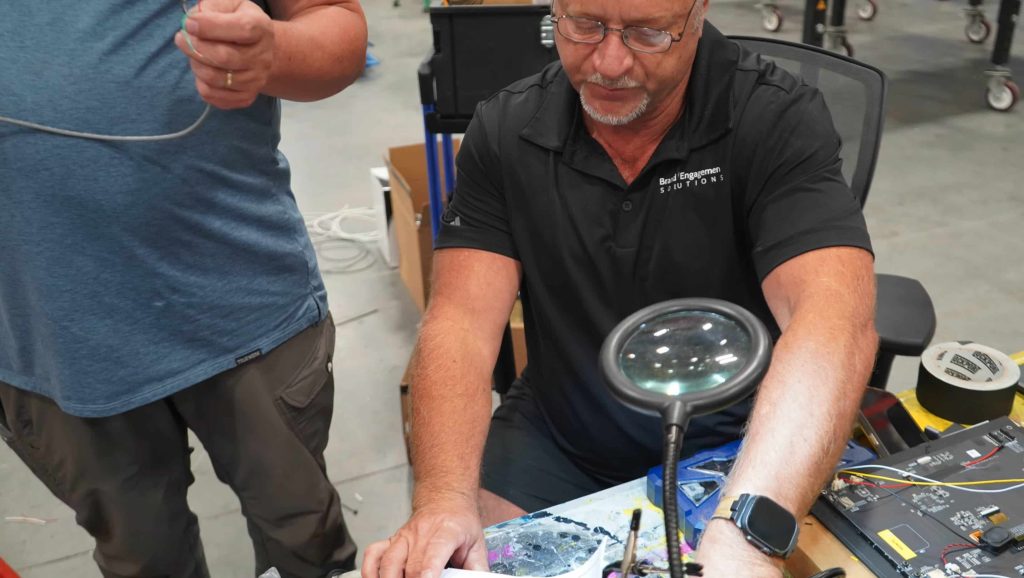
The compressed schedule made this project especially hands-on. Elation CEO Christian Rogne orchestrated the Elation team while also working onsite alongside our fabrication partner during electronics integration: soldering, wiring, testing and helping push the game toward its first deployment.
He wasn’t the only one giving up part of a weekend. One of our project managers came into the shop with her six-year-old during the final build, which gave us an unexpected extra test player. A game designed primarily for college football fans proved just as intuitive to a six-year-old: pick up the football, see the illuminated target and throw.
[Photo 4: Christian Rogne soldering or wiring during electronics integration]
We captured the electronics work, fabrication integration and game testing in a short behind-the-scenes video.
By the fourth weekend of the 2026 college football tour, something happened that we like to see with touring technology: the crew got faster. The three-wall structure, netting and integrated electronics are becoming routine, and each setup teaches the tour operators small efficiencies that make the next load-in easier.
The guest experience stays deliberately simple. The bright target rings attract attention, the large timer creates urgency, the score display adds competition, and different target sizes reward accuracy. Because people immediately understand what to do, throughput stays high. There’s no lengthy tutorial standing between the fan and the experience, just a football waiting to be thrown.
Projects like the CELSIUS Football Toss show the role Elation often plays in a larger experiential production ecosystem. We don’t need to originate the creative concept or fabricate every physical component to add value. Sometimes an agency has the idea and a fabricator knows how to turn it into a physical environment. What’s missing is a technology partner who can answer the next question: how do we actually make this work?
That’s where Elation Brand Engagement Solutions comes in. We collaborate with experiential agencies, brands, fabricators and production partners to develop the electronics, software and interactive technology that turn physical environments into brand engagements. Sometimes that means AI, AR, cameras or touchscreens. Other times, as with the CELSIUS Football Toss, the best technology is intentionally invisible.
The player just sees the target light up, throws the football and watches the scoreboard change. And the tour operator? Ideally, they plug it in and never have to think about what’s happening behind the wall.
Have a concept that needs to survive the road? Talk to Elation about building it.