
What happens when a simple arcade claw machine inspires a new way to explain a complex pharmaceutical therapy?
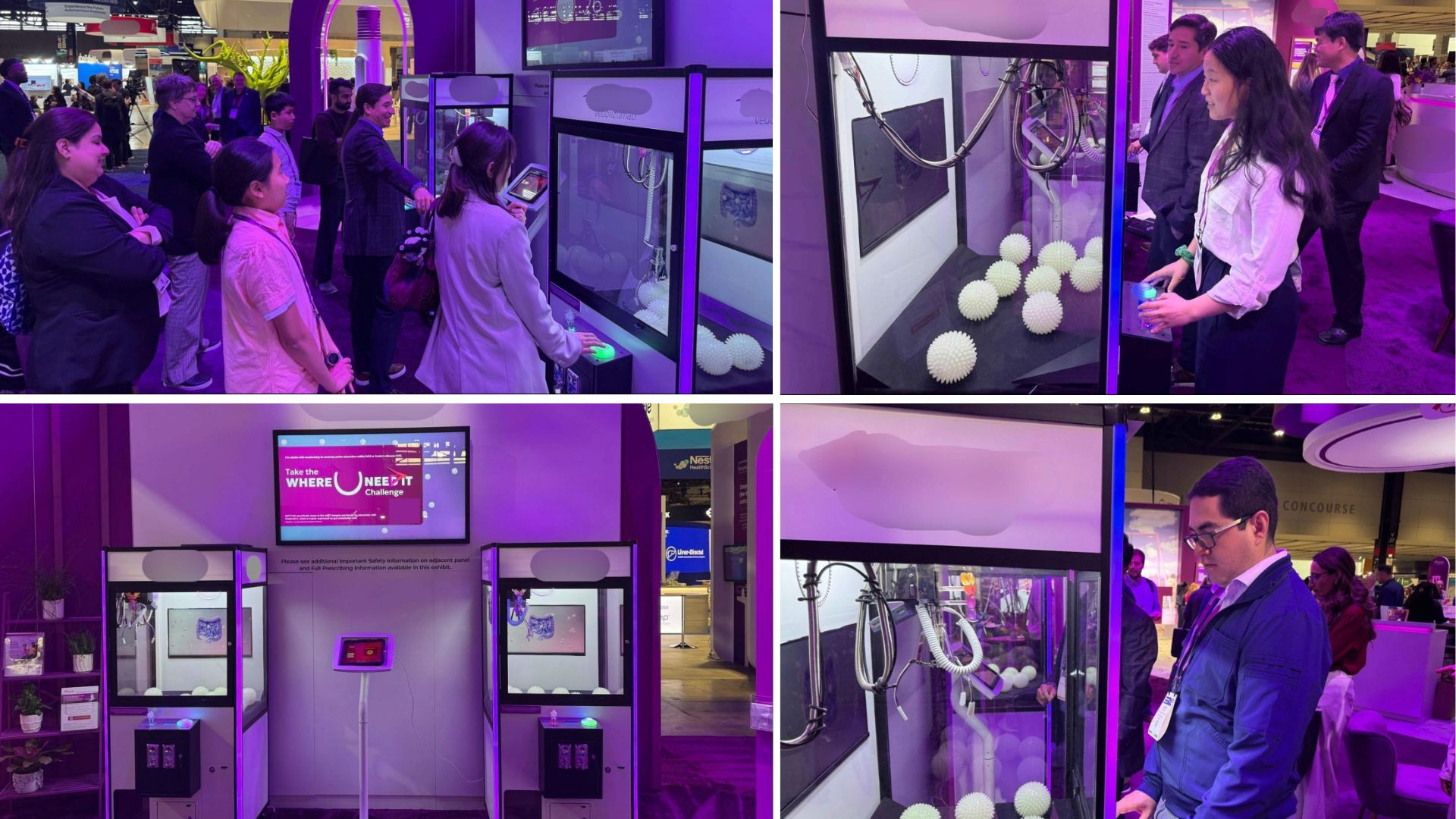
For DDW 2026, Elation Digital partnered with an agency and pharmaceutical client to transform a classic claw machine into a custom two-player interactive experience. By combining physical gameplay, RFID technology, educational storytelling, and competitive gamification, the activation helped attendees understand how the therapy worked while drawing crowds throughout the event.
The result was an engaging booth attraction that delivered over 300 competitive game sessions, generated thousands of impressions, and turned a scientific concept into a memorable hands-on experience.
DDW 2026
RFID Tracking + Custom Software
Late in 2025, a pharmaceutical company’s marketing executive was spending time with his children while they played a vintage claw machine.
As he watched them maneuver the claw, attempting to grab prizes and lift them to safety, a connection began to form. The challenge of capturing and protecting an object inside the machine mirrored the scientific story behind one of his company’s therapies.
The concept was intriguing. Could a familiar arcade game be transformed into an interactive learning experience that helped healthcare professionals better understand how the therapy worked?
With that vision in mind, the client approached their agency, who then partnered with Elation Digital to explore what was possible.
What started as a moment of inspiration in an arcade was about to become a custom two-player claw machine experience unlike anything attendees had seen before.
Explaining complex medical concepts in a way that is both memorable and engaging can be difficult, especially in a busy trade show environment where attendees are constantly being presented with new information.
The client needed a creative way to demonstrate how their therapy interacted with white blood cells and helped protect patients with a specific condition.
Traditional marketing materials could communicate the science, but they wanted an experience that would capture attention, encourage participation, and leave a lasting impression.
Rather than simply telling attendees how the therapy worked, the goal was to create an interactive experience that would allow them to see the mechanism in action through gameplay. The challenge was clear: transform a complex scientific process into something intuitive, educational, and fun.
With the challenge defined, our team began exploring how to transform the client’s concept into an engaging hands-on experience.
Traditional claw machines are designed as games of chance, but this project required something entirely different.
The experience needed to tell a story, educate participants, and encourage friendly competition while remaining easy to understand and fun to play.
To achieve this, we reimagined the classic claw machine as a custom two-player interactive game.
Players would compete against each other to capture and protect as many white blood cells as possible within a set time limit.
A custom digital interface introduced the therapy’s mechanism of action, tracked scores in real time, and amplified the competitive nature of the experience.
The result was a unique blend of physical gameplay, educational storytelling, and gamification that brought the client’s vision to life in a memorable and engaging way.
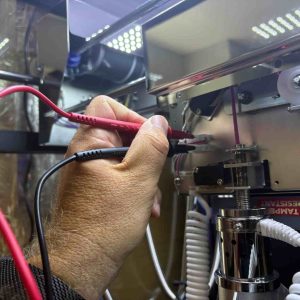
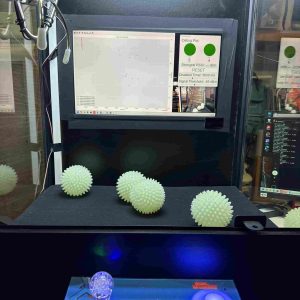


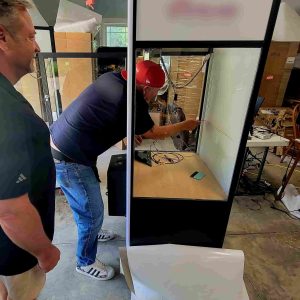
Bringing the concept to life required far more than simply modifying an existing claw machine. To create the experience the client envisioned, our team had to rethink how the machine operated and integrate custom technology that connected the physical gameplay with a digital educational experience.
The project involved modifying the machine’s control systems, developing custom software for scoring and game management, and creating an on-screen experience that introduced players to the therapy before the competition began. Every element had to work together seamlessly to ensure gameplay remained intuitive while accurately supporting the educational message.
From hardware integration and custom programming to testing and calibration, the project became a true collaboration between creative design, engineering, and experiential technology. The result was a custom-built activation that looked familiar on the outside but operated very differently behind the scenes.
One of the most significant challenges emerged during development: how could the game accurately track successful captures and award points to players?
In a traditional claw machine, prizes are dropped into a chute equipped with sensors that detect when a win has occurred. However, this custom experience did not use a prize chute, meaning the standard tracking method was no longer an option.
To solve the problem, our team developed a custom RFID-based tracking system. Small RFID tags were embedded inside the white blood cell game pieces, while specially integrated readers detected when a successful capture occurred. This allowed the system to reliably track player actions, award points in real time, and power the competitive gameplay experience.
The solution not only overcame a technical obstacle but also became a key innovation that made the entire gamified experience possible. By combining custom hardware integration with software development, we transformed a classic arcade mechanic into an interactive educational tool capable of delivering both engagement and measurable results.
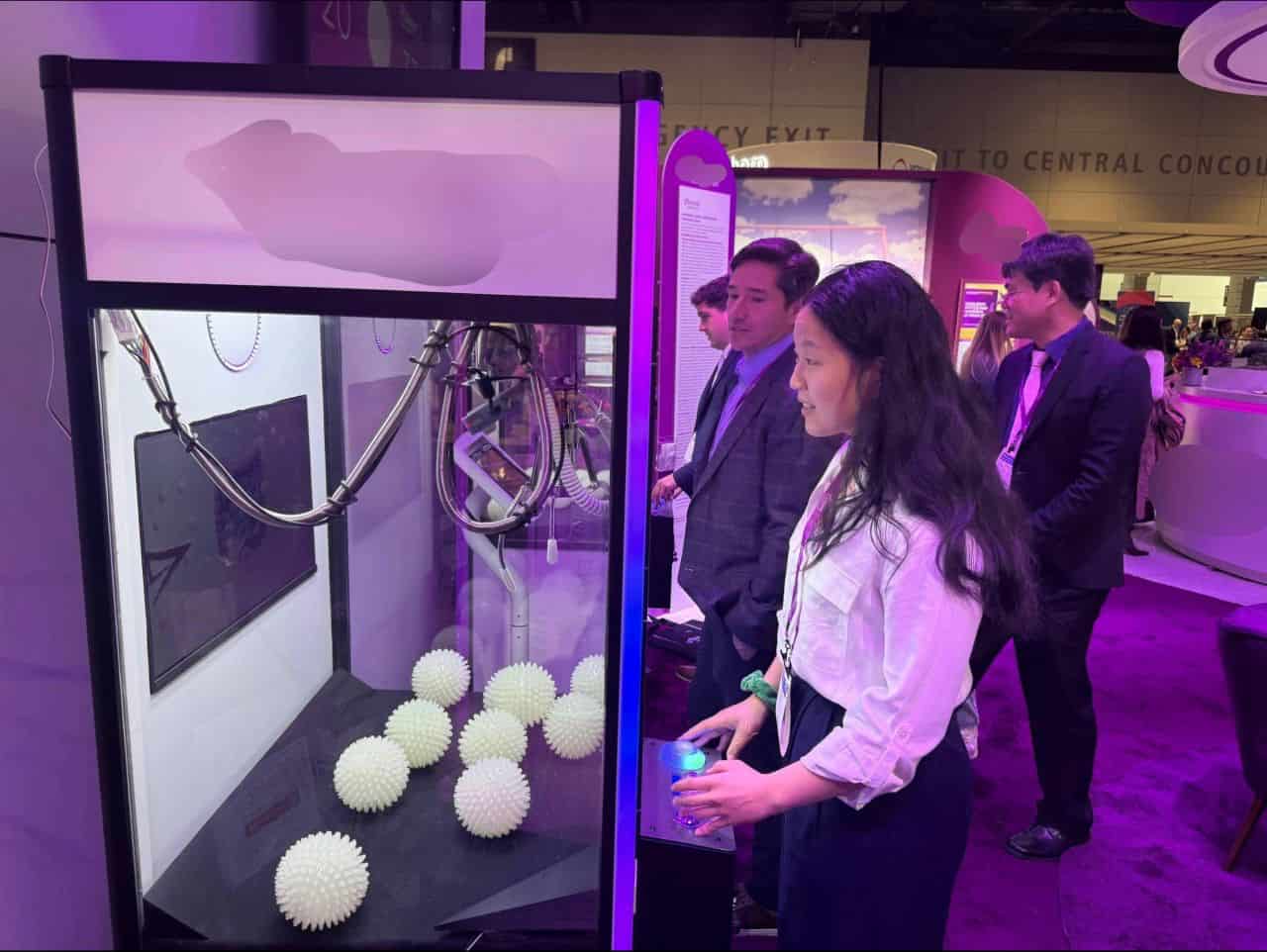

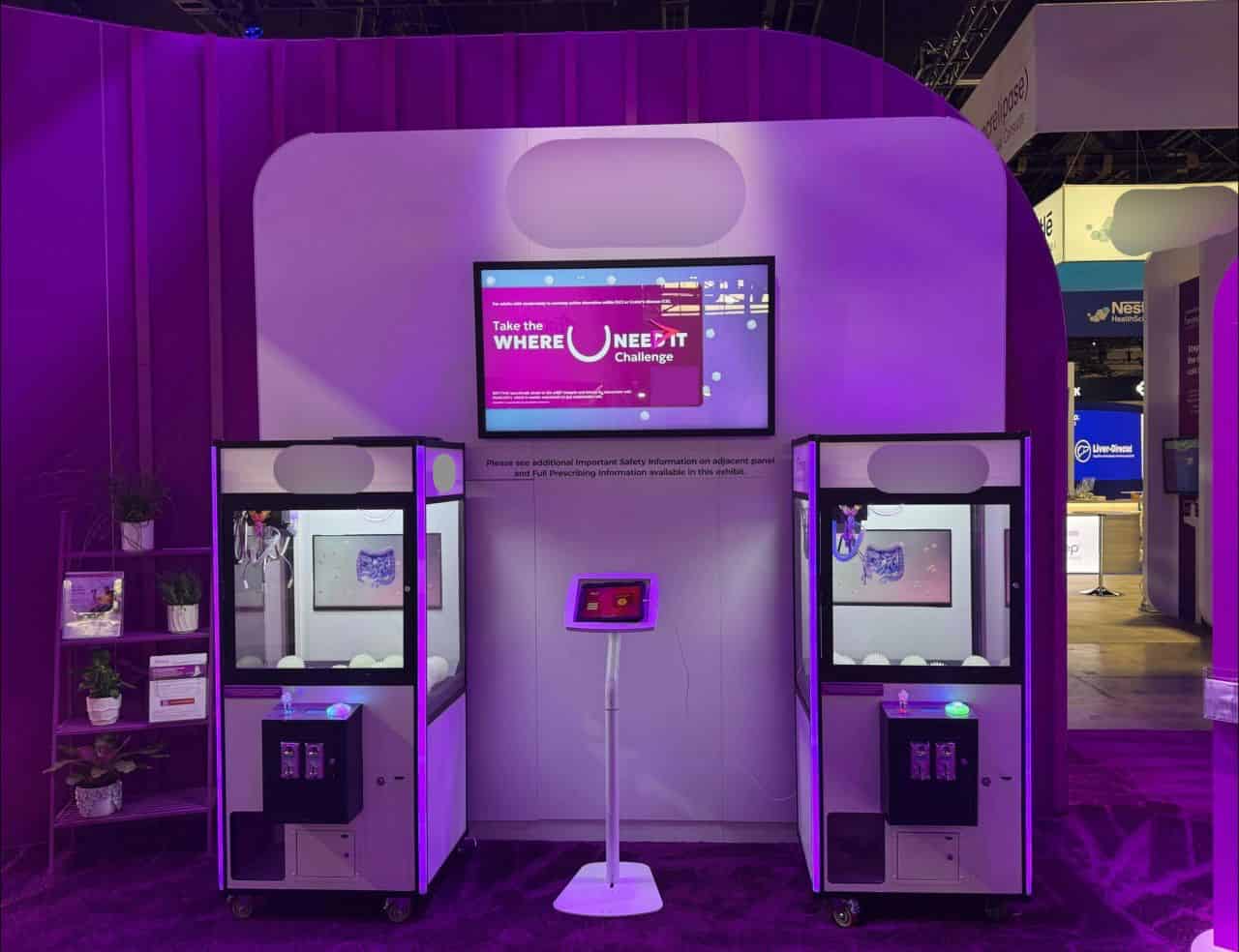

When the custom two-player claw machine debuted at DDW 2026, it quickly became one of the most talked-about attractions on the show floor.
The experience drew attendees in with its familiar arcade-inspired gameplay, but it was the combination of competition, education, and live interaction that kept crowds engaged.
Before each round, participants learned how the therapy worked through an on-screen introduction, while a game host guided players through the experience and amplified the competitive energy.
Throughout the three-day event, attendees challenged colleagues, friends, and industry peers to see who could successfully protect the most white blood cells. Spectators gathered around the booth to watch the action, creating additional exposure and sparking conversations about the therapy and its benefits.
The activation delivered more than 300 competitive game sessions and generated thousands of impressions from both participants and passersby. More importantly, it succeeded in transforming a complex scientific concept into an engaging, memorable experience that encouraged learning and meaningful conversations.
The response was so positive that the client decided to bring the experience to additional events after DDW 2026. Seeing the original vision come to life—and watching attendees actively engage with it—made the project a success for everyone involved.
For our team, it was another reminder that great experiences often start with a simple idea and a willingness to try something different.