
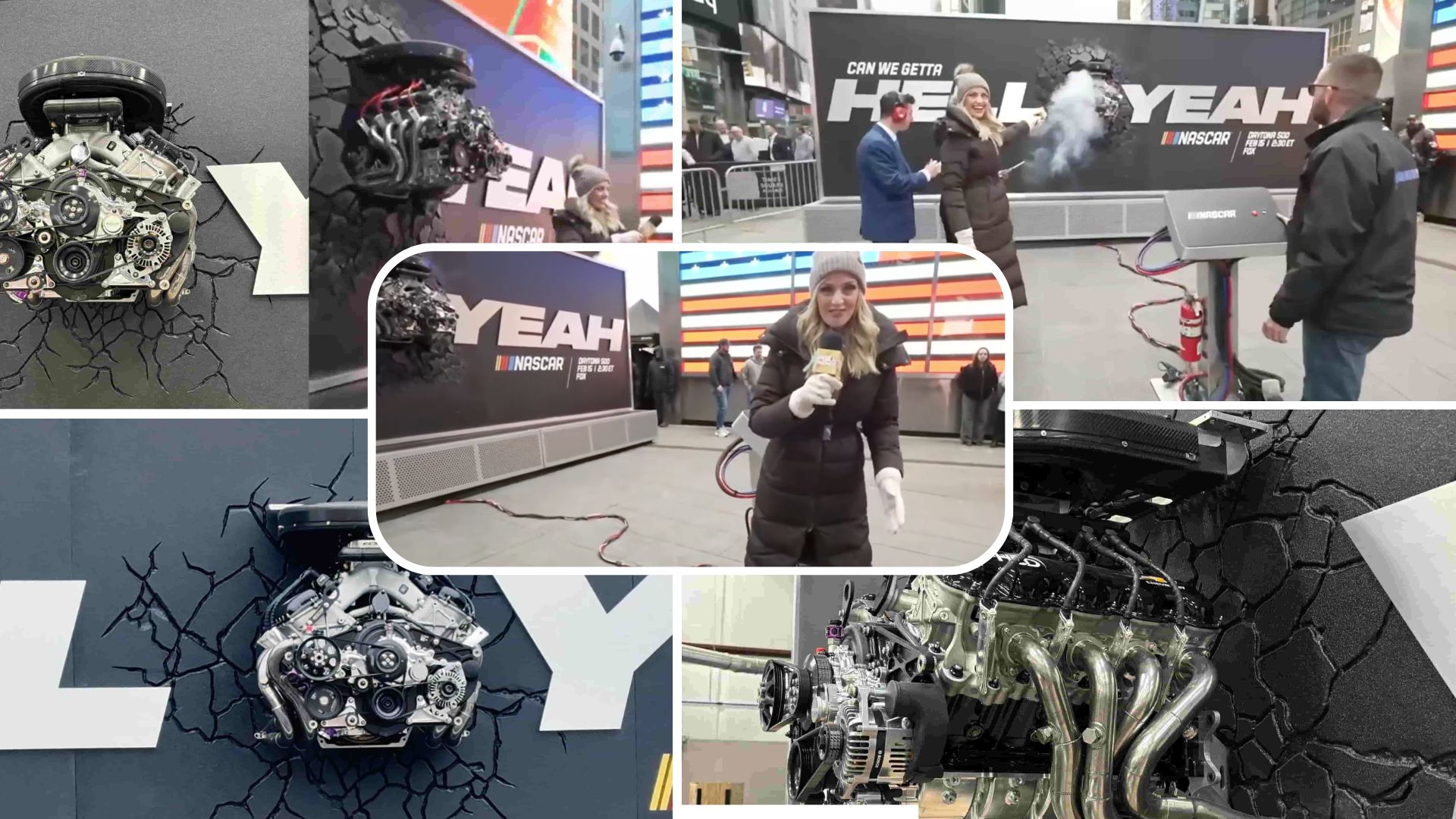
When NASCAR wanted to kick off its 2026 season with something impossible to ignore, it didn’t turn to another digital ad. It built a billboard that roared.
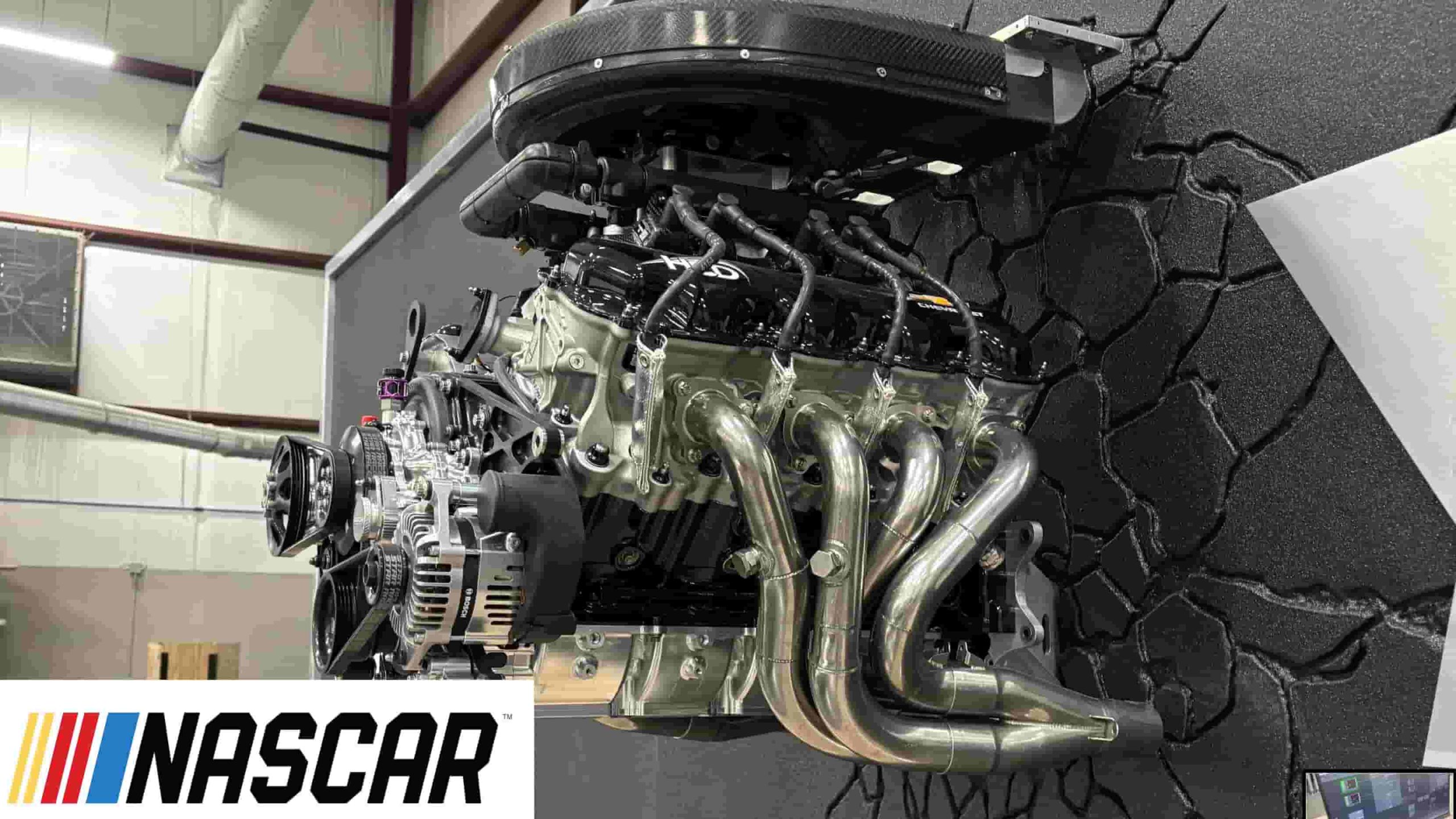
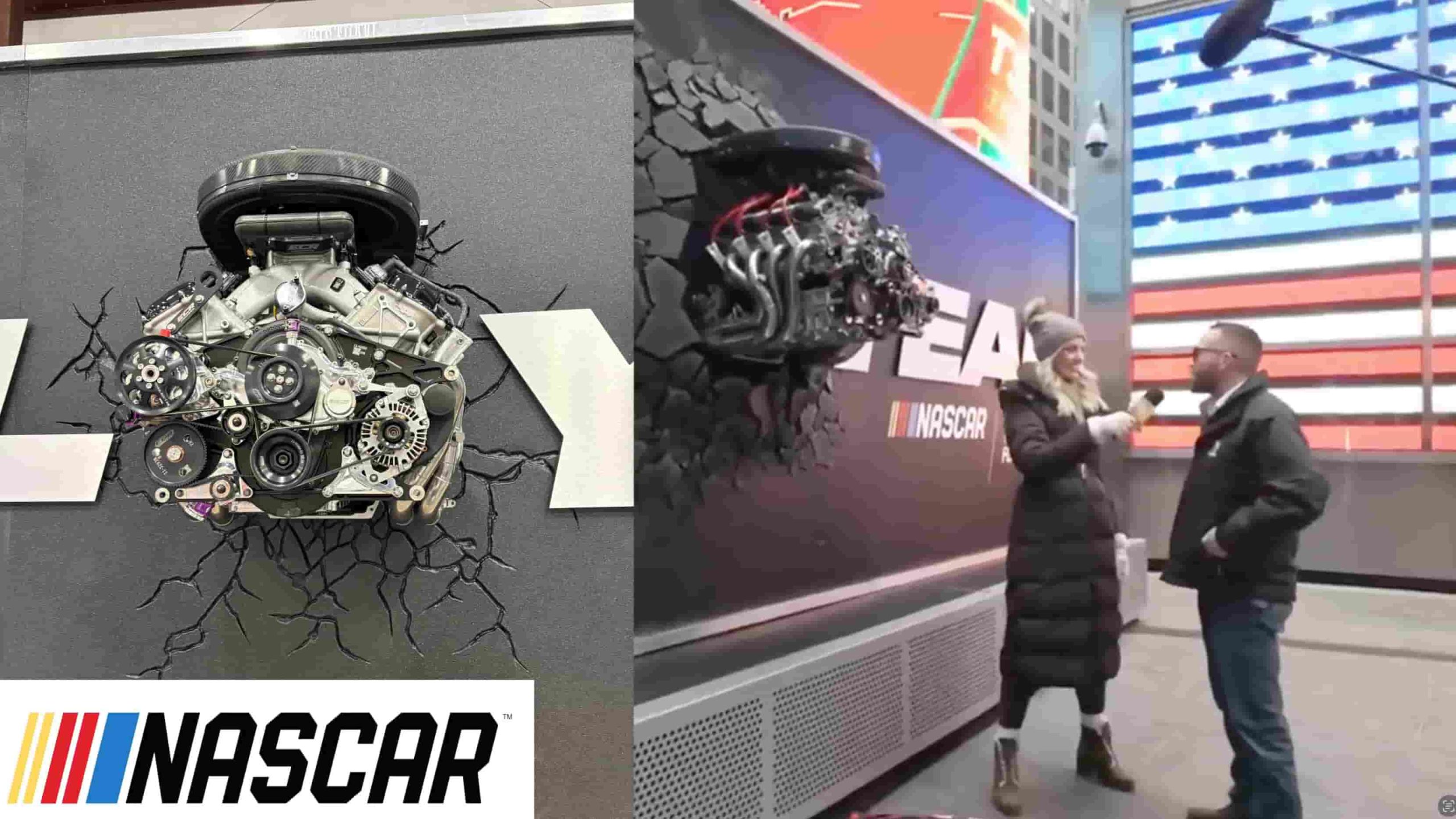
In February 2026, a 1:1 replica NASCAR Next Gen engine came to life in the middle of Times Square, hitting a peak of 133.7 decibels, louder than peak stadium crowd noise at many facilities and roughly 32 times as loud as a typical shower or dishwasher.
Ross Chastain pushed the button, and the engine roared to life and shattered the previous world record of 100 decibels, with a Guinness World Records official on-site to confirm the achievement.
Our team was proud to be part of the engineering that made that roar possible. Getting a static billboard to sound, feel, and behave like a real 750-horsepower stock car engine takes a lot more than a speaker and a sound file. Here’s a behind-the-scenes look at how we approached the challenge.
Authenticity was non-negotiable. A generic engine sound effect would never have held up under Guinness World Records scrutiny, let alone fooled thousands of NASCAR fans in one of the busiest intersections on Earth.
So we started at the source. Our team traveled to a specialized NASCAR engine shop and used professional sound recording equipment paired with computerized engine run programs to capture proprietary audio of every phase of a real NASCAR engine cycle: startup, idle, throttle response, RPM acceleration, and deceleration curves. This gave us a library of authentic sound data that reflected the exact acoustic signature of a genuine Cup Series engine, not an approximation of one.
Raw recordings are only half the equation. A billboard doesn’t rev an actual engine, so the sound has to respond in real time to simulated driver input in a way that feels physically believable.
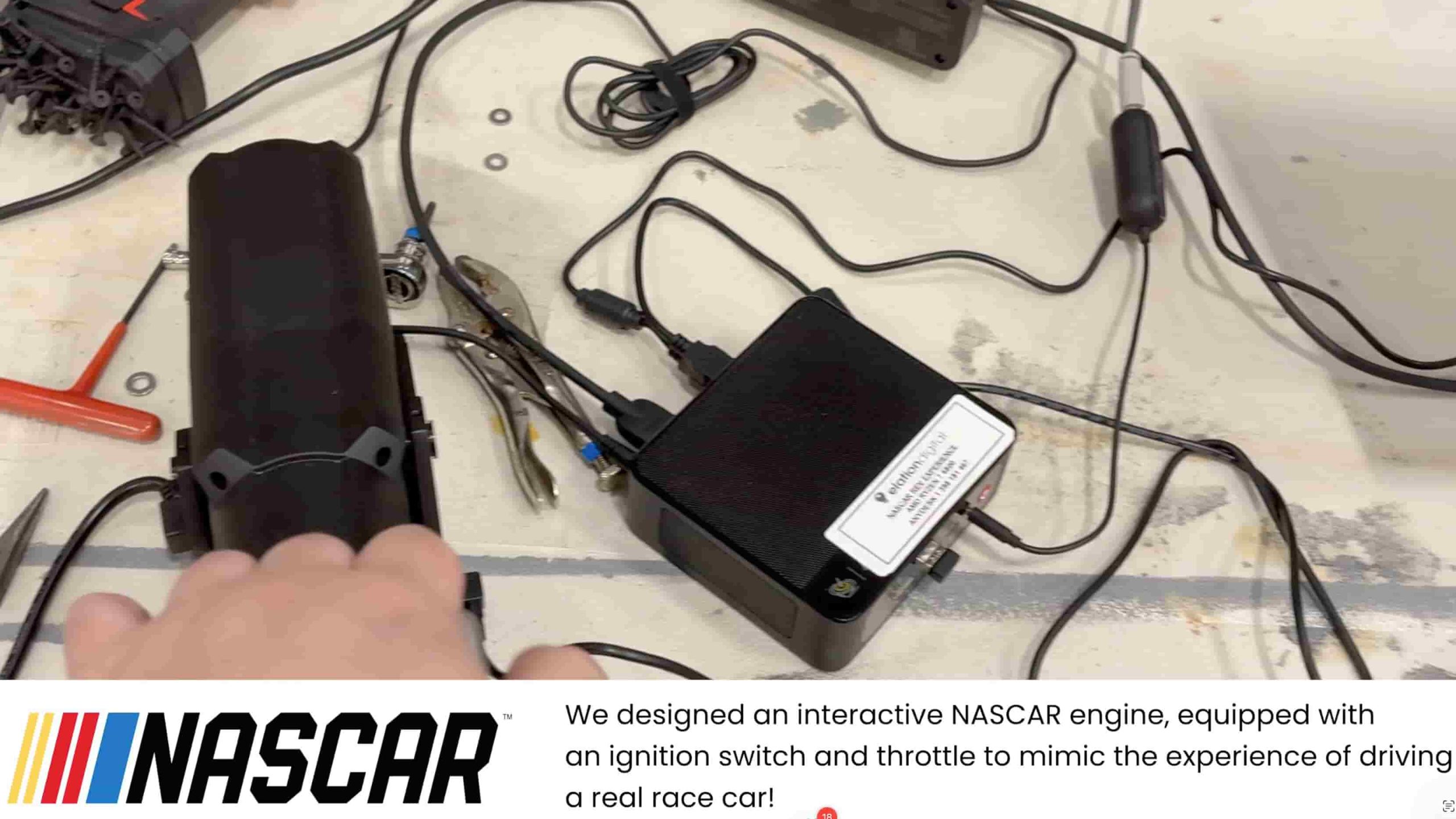
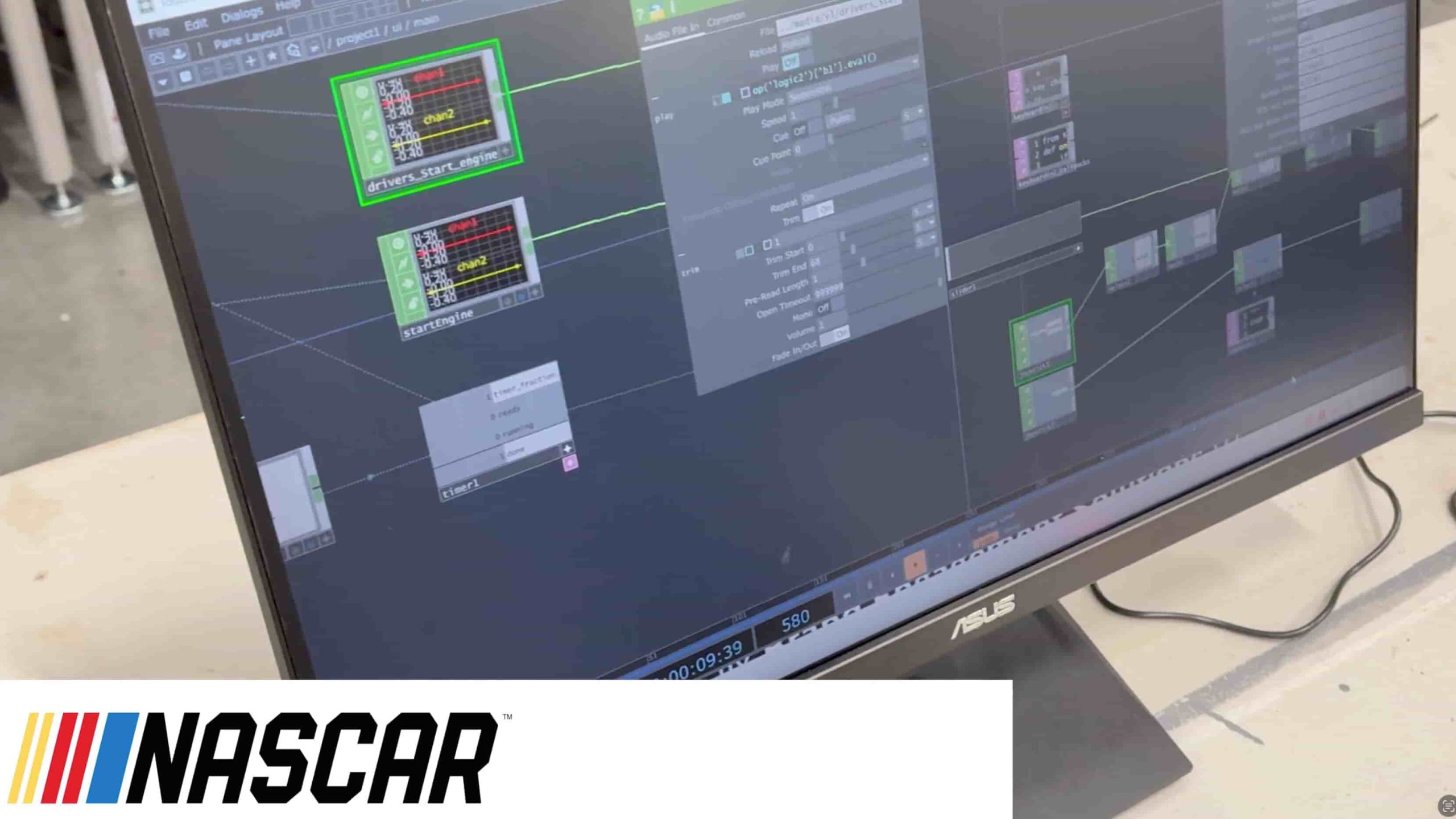
Our engineering team built custom algorithms that translated electronic triggers, like a startup command or a throttle push, into the correct corresponding audio response.
The result was a hyper-realistic playback system that mimicked the way a real NASCAR engine actually behaves under load: the way it catches on startup, the way RPMs climb and fall, and the subtle acoustic changes between them.
This is the same kind of precision engineering our team applies to interactive activations like the reaction-based experiences we’ve built for motorsport audiences, including our Indy 500 interactive reaction experience, where split-second responsiveness is what makes the moment feel real.
Sound alone wasn’t enough. To sell the illusion of a running engine, the billboard needed visible motion. Our team engineered electronic motor controls to drive a fan pulley system, replicating the rotational movement you’d see under the hood of an actual race car. Paired with the audio, this gave the installation a mechanical presence that read as real to onlookers rather than as a prop.
No NASCAR engine at full throttle is complete without a little smoke. For an extra layer of showmanship, our team integrated a smoke machine that was triggered automatically during extended high-RPM redline periods. We did this by hacking into the smoke machine’s internal controls and building a custom programmatic trigger system, so the smoke effect fired in perfect sync with the simulated engine behavior rather than on a manual cue. It’s a small detail, but it’s exactly the kind of layered, sensory engineering that turns a static display into an unforgettable, share-worthy experience.
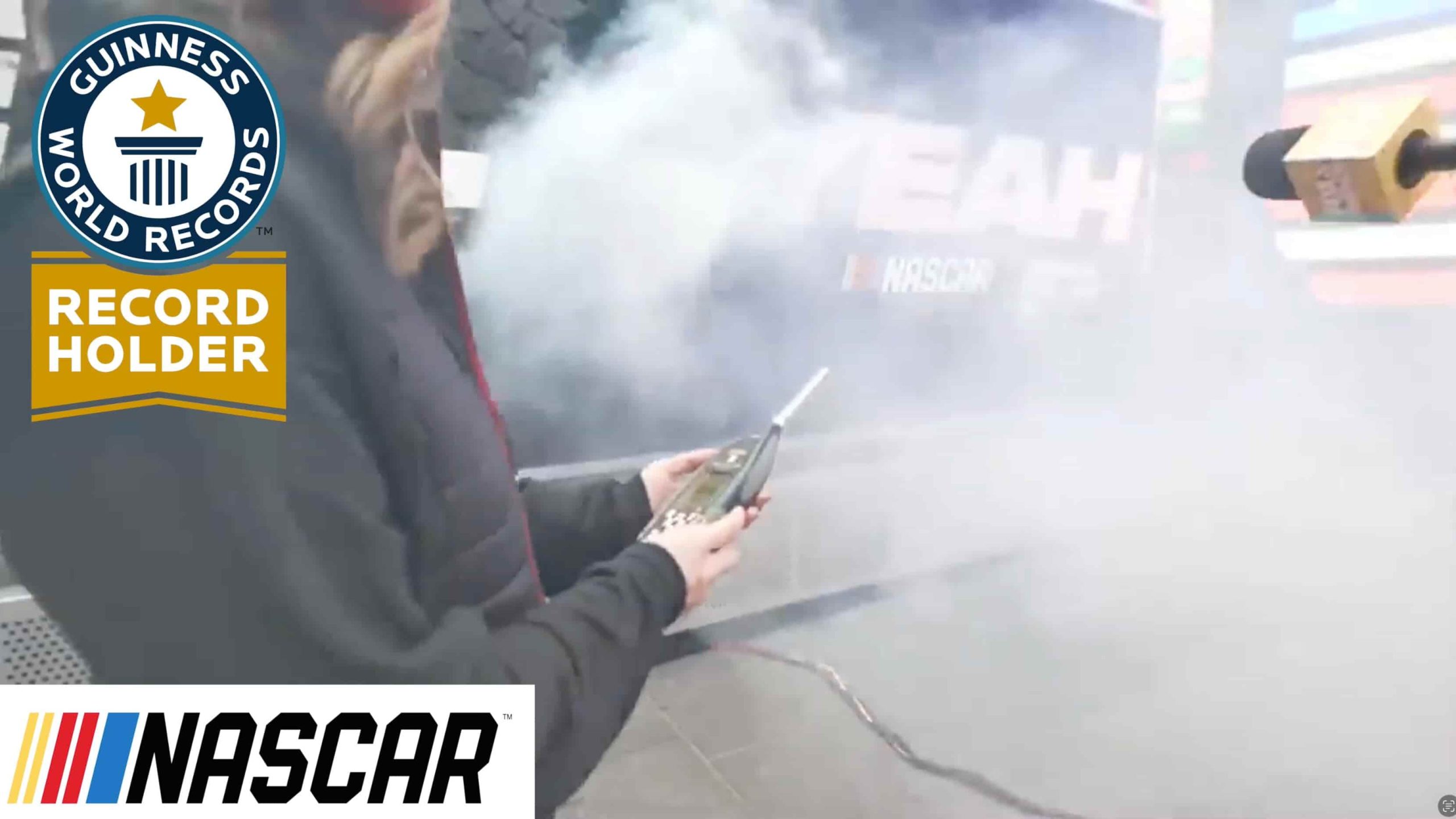
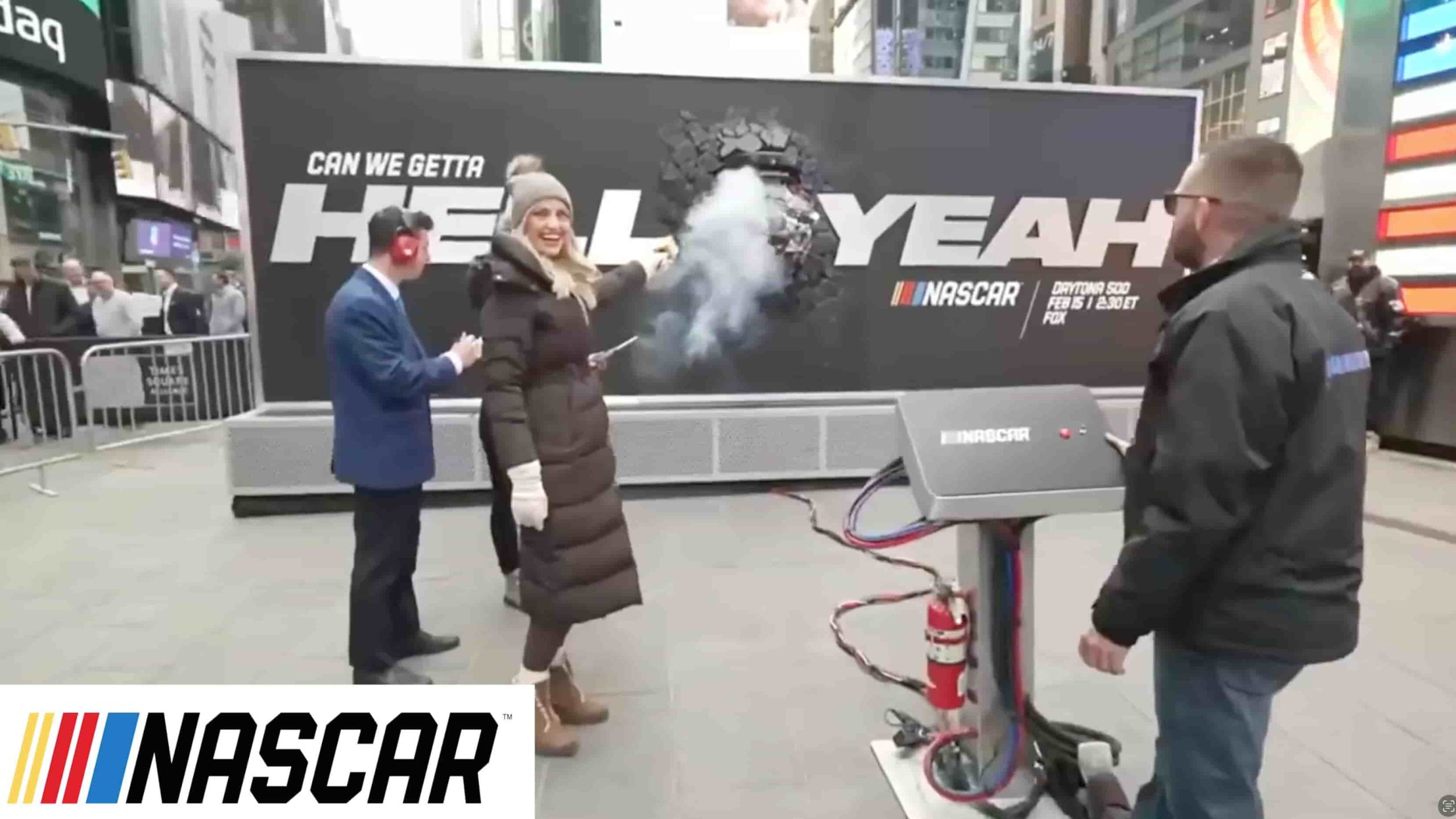
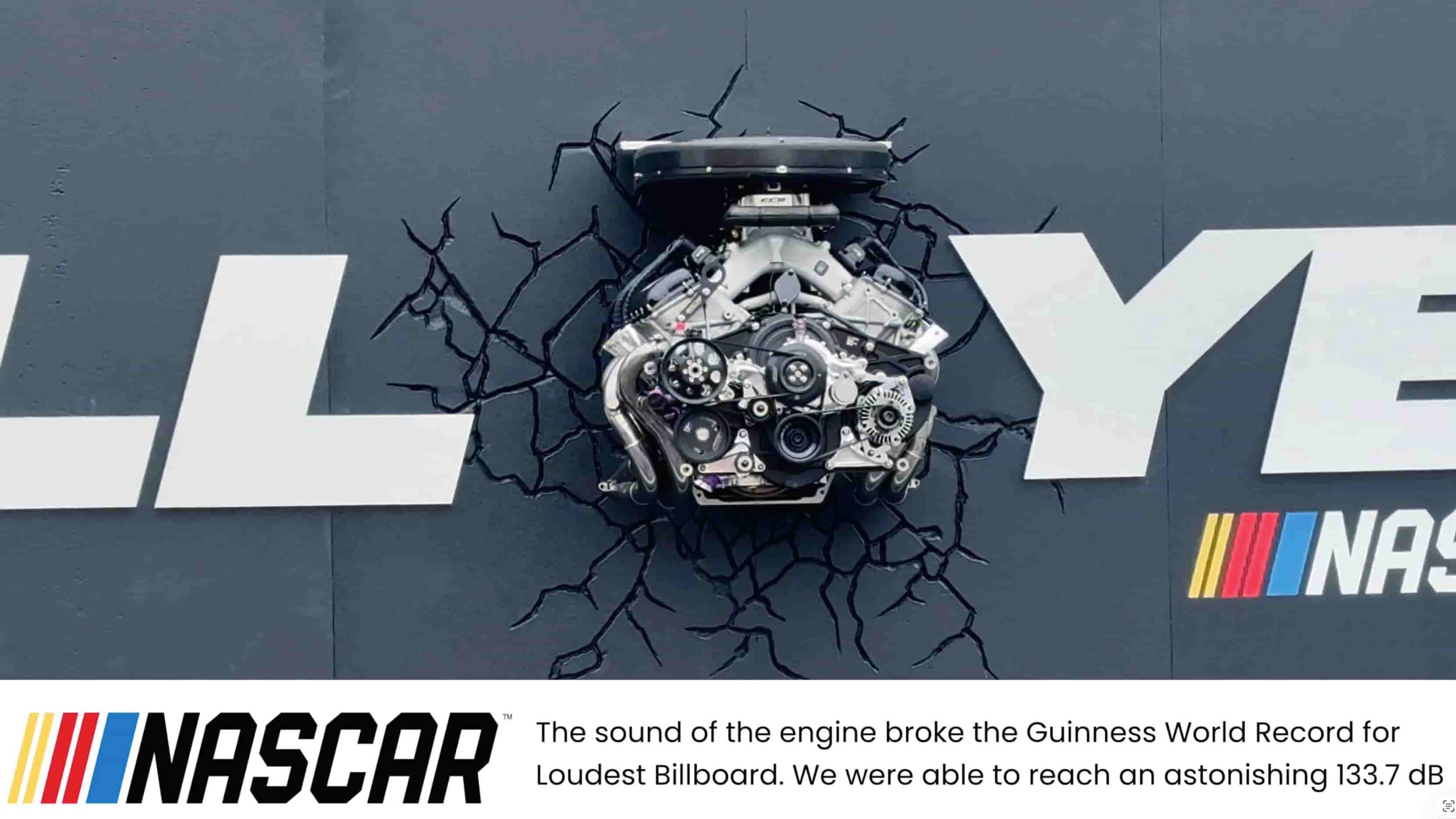
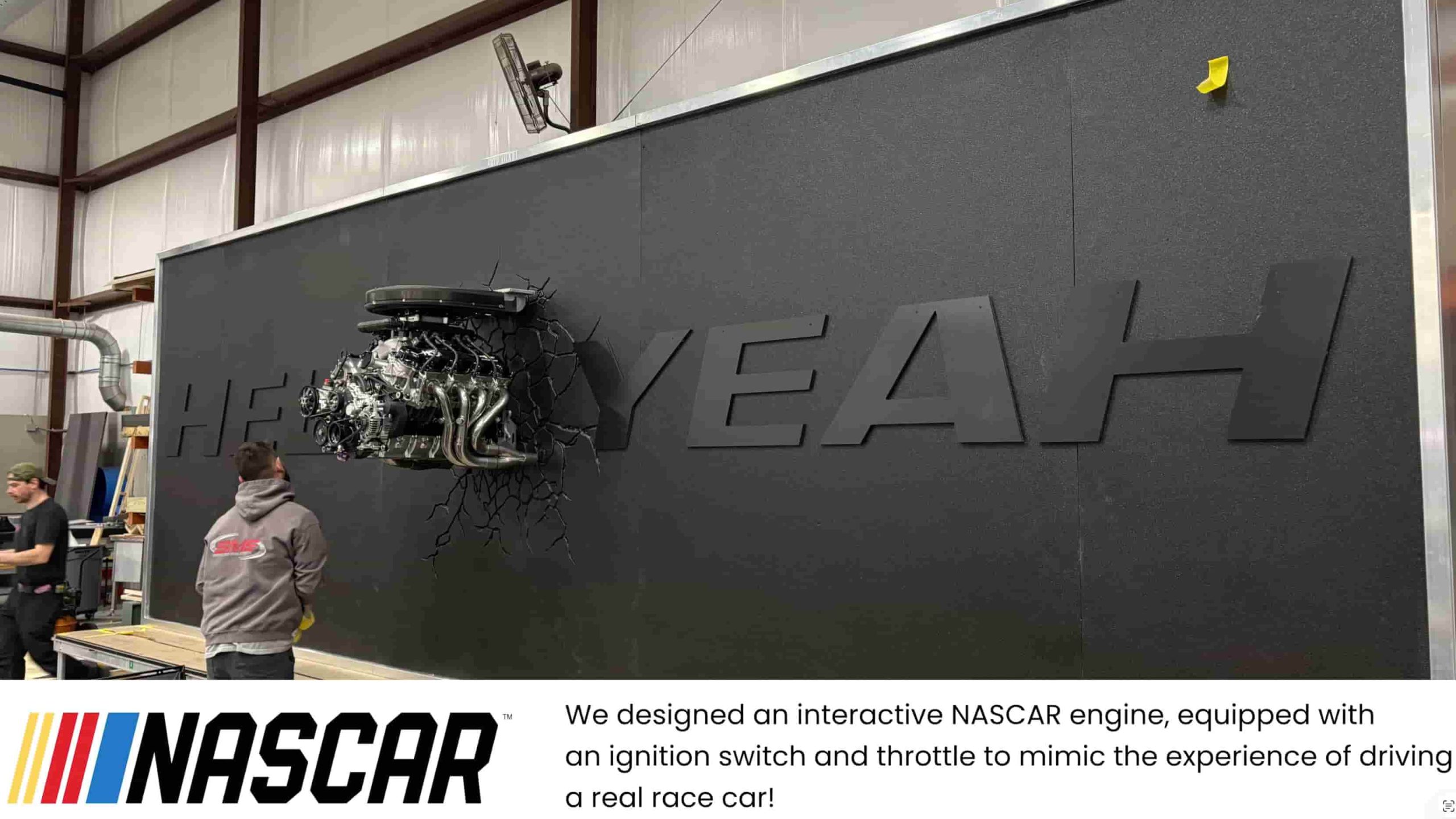
The combination of authentic sound engineering, responsive control systems, mechanical motion, and synchronized smoke effects is what allowed the activation to physically deliver on its goal.
Certified by Guinness World Records live on FOX, the billboard let people in one of the world’s most iconic urban settings hear and feel the raw power of stock-car racing ahead of the Daytona 500.
It wasn’t just a record on paper; it was a full sensory takeover of Times Square, and the engineering behind the sound and motion is what made that possible.
Projects like this are a reminder of what sets a truly memorable brand activation apart from a standard out-of-home placement: multi-sensory realism. Sound, motion, and physical effects working together create moments that people stop for, film, and talk about long after they’ve walked away. That principle holds true whether you’re building a record-setting billboard or a trade show booth game designed to stop foot traffic on a show floor.
It’s also a good example of why experiential marketing continues to outperform passive advertising for brand recall and engagement.The activation was designed to reconnect the sport with its roots while also reaching new audiences,
and the sensory, in-person nature of the experience is exactly why it worked. If you want to see the data behind why these kinds of immersive activations move the needle, our breakdown of experiential marketing statistics digs into the numbers.
Whether it’s a full-scale sound and motion build like this one or a more contained activation for a trade show or conference floor, our team specializes in engineering the kind of interactive, sensory-driven experiences that get people talking. Explore our full lineup of branded games and interactive experiences to see what we can build for your next activation.