
Client: BA Ecobici, the free public bike system run by the City of Buenos Aires
The bikes were already there. So were the lanes. BA Ecobici had been running for years, and most people in Buenos Aires knew it existed.
What the city didn’t have was a way to change anyone’s mind. You can put the facts on a poster — less pollution, better health, less time in traffic — and people will read it, agree with it, and drive to work the next morning anyway. Almost nobody needs to be told that a bike is better for them and better for the city.
So the job wasn’t to explain anything. It was to make someone feel the difference in the one minute they were willing to give us at a public event.
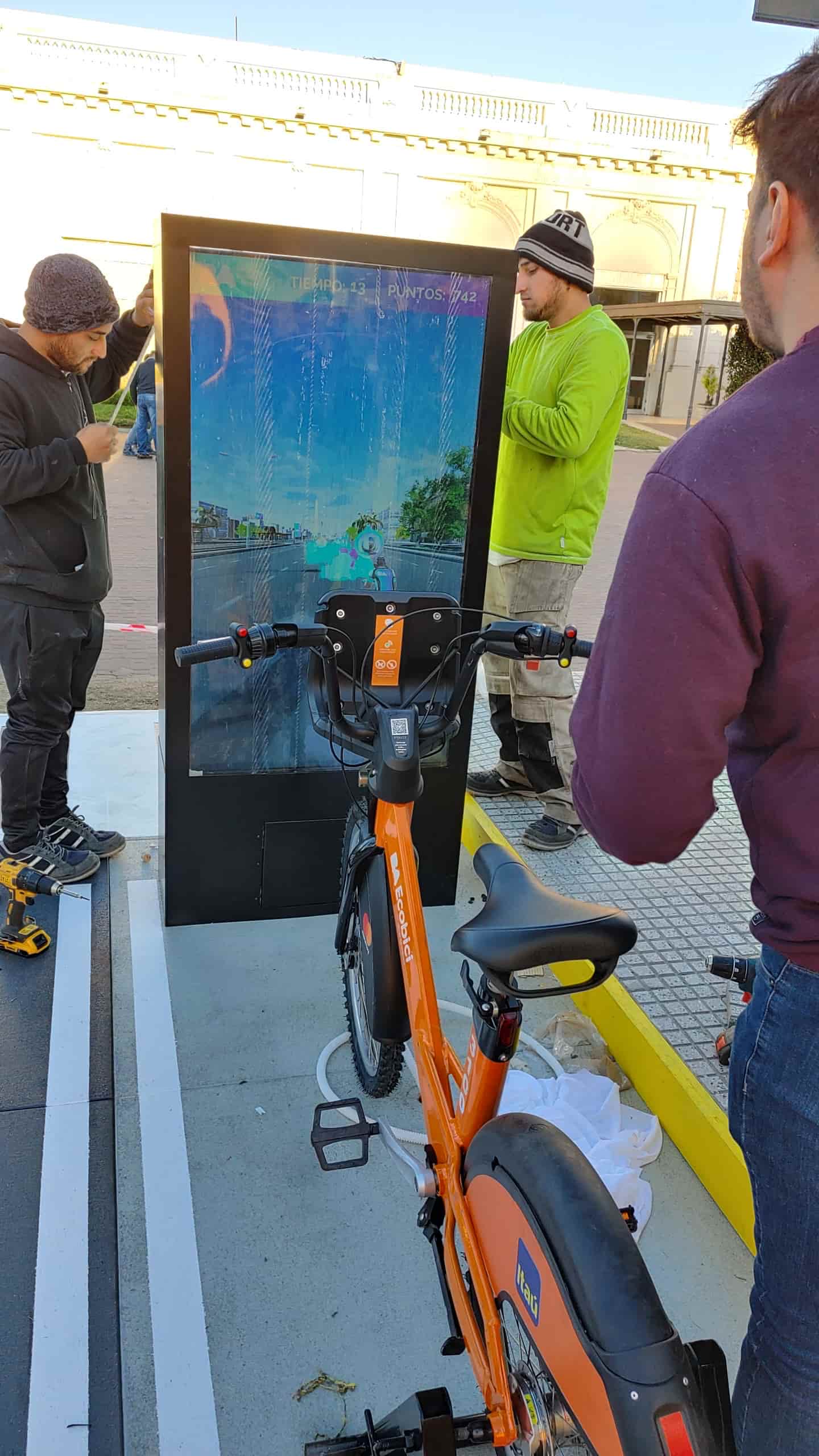
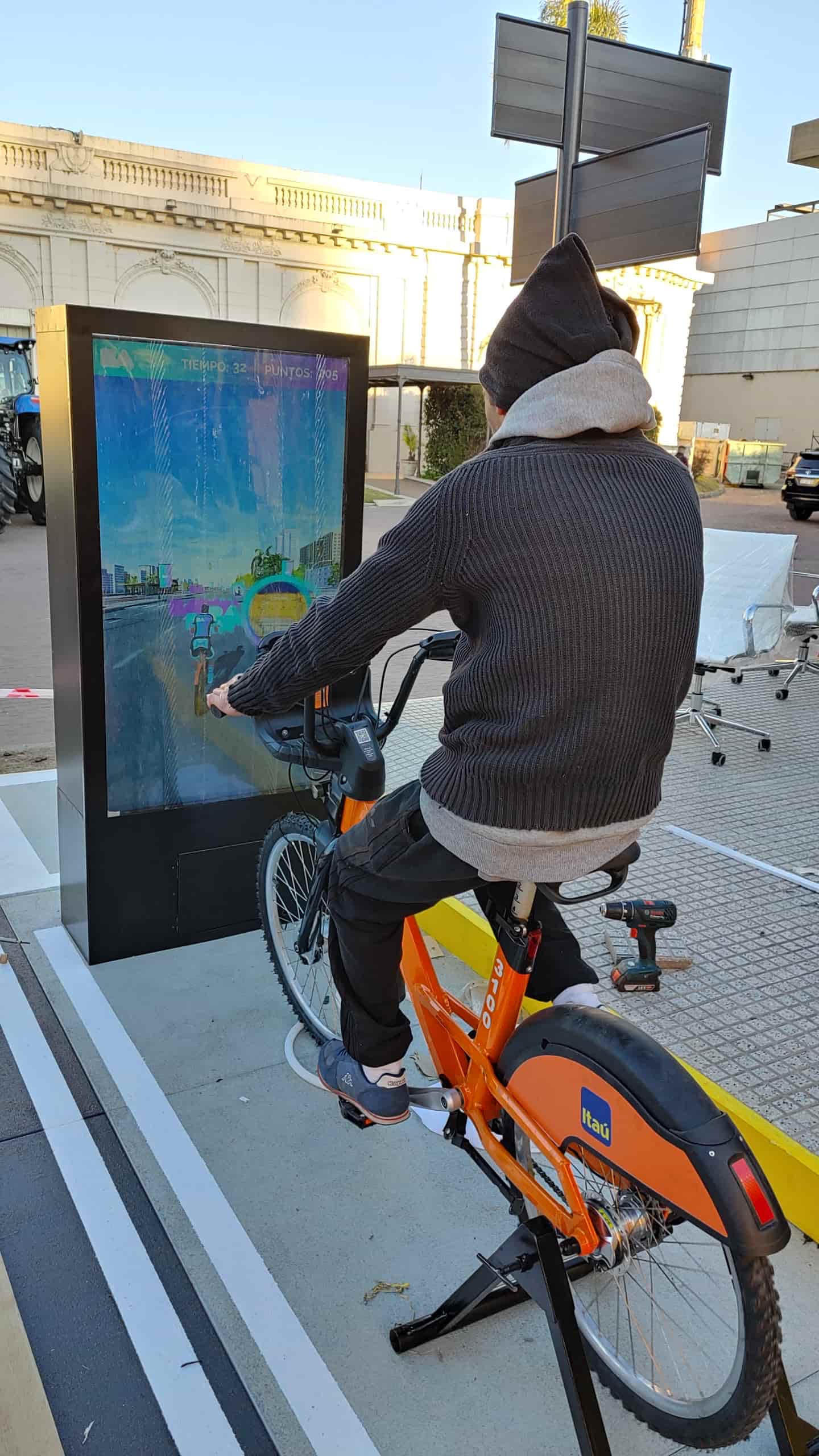
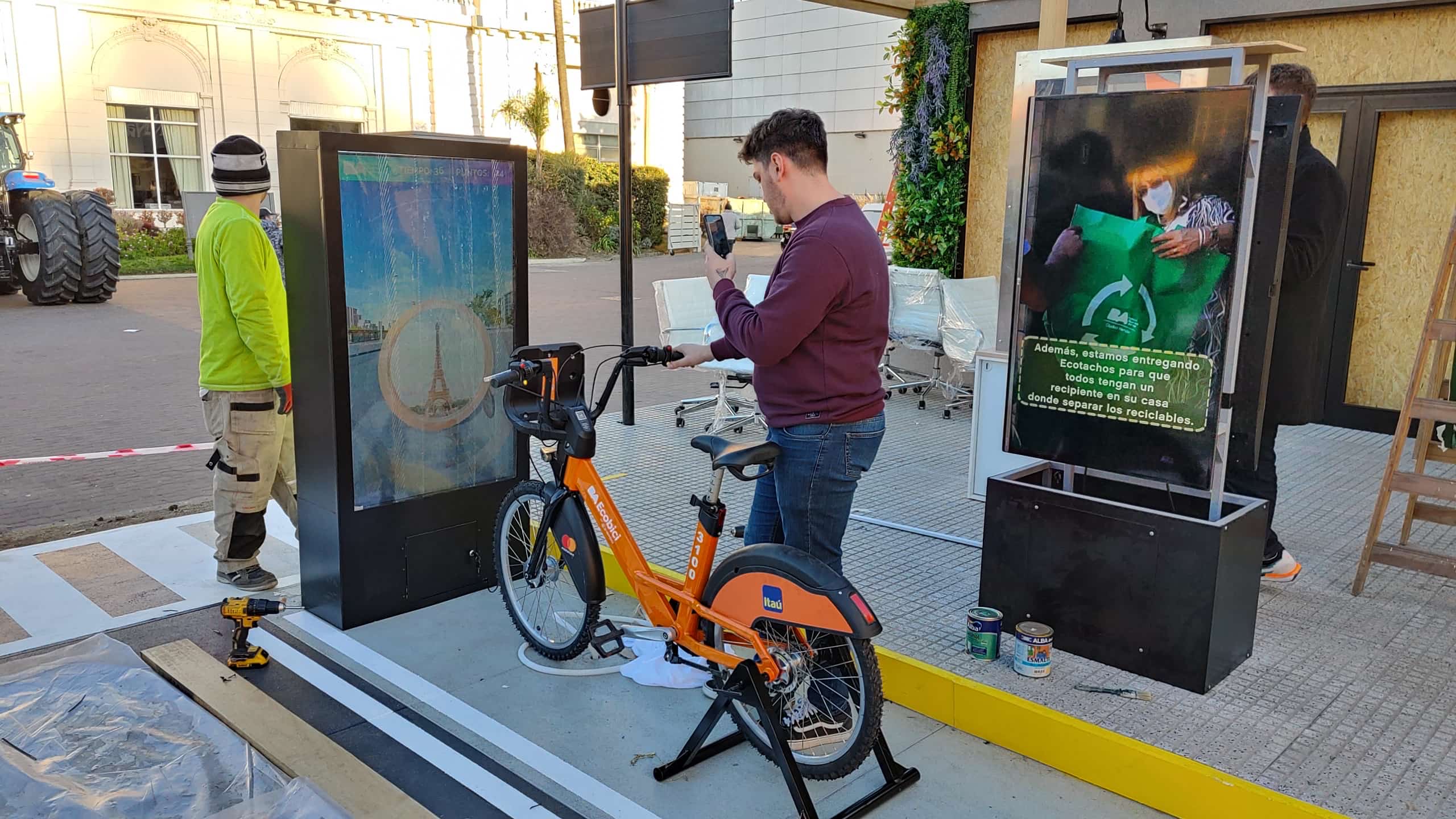
We started with an actual Ecobici bike — same orange frame, same branding, same slightly upright riding position anyone who’s used the system would recognize. We mounted it on a stand so it could be ridden safely in one spot, then fitted it with sensors that read pedaling and fed it straight into the game.
Using the real bike instead of a gym bike was the single most important decision in the build. A generic exercise bike would have made the whole thing a workout demo. The real frame meant every person who got on it was practicing the exact thing the city wanted them to do that Tuesday at a station near their apartment.
We built the game from scratch. It’s a ride through parts of the city people recognize. Pedal and you move forward. Stop pedaling and you stop.
There was no joystick, no touchscreen, no button. Effort was the only thing the game responded to. That ruled out a lot of shortcuts during the build, but it’s what made the point land — the player’s own legs were part of the argument. It’s the same thinking behind most of the games we build for brands: what the player physically does should be the point, not decoration around it.
Scattered along the route were prizes to collect. At checkpoints, the city’s messages unlocked.
We deliberately didn’t put those messages up front or loop them between players. We buried them in the game so you had to get there to see them. The line about pollution shows up forty seconds in, when your legs are burning and you’re already doing the thing being asked of you. It reads as agreement instead of a lecture.
A live timer and score ran the whole time. That turned the waiting line into a competition — people watched the score of whoever was riding, then stepped up with a number to beat. Nobody needed talking into it.
The game ran on a tall weatherproof screen in front of the bike. Next to it we put a second screen carrying the city’s other environmental messages — the recycling program, the bins being handed out, what people could do at home.
This is the part that usually gets skipped. At any outdoor event, the people watching outnumber the person playing four or five to one. If your only screen faces the rider, everyone else spends the minute looking at a stranger’s back. Two screens — one that pulls people in, one that gives the crowd something while they wait — does far more work in the same space.
Screens bright enough to read in direct sun, cases that handle weather and knocks, and a setup that can be assembled on site. None of that gets solved on event day. Our touchscreen kiosks are specified for this months before anyone shows up with a drill, because getting it wrong means watching people squint at a washed-out screen all afternoon.
Rides, scores, and sign-ups were all captured through the game itself. A city program that can’t show how many people took part doesn’t get funded a second year. Putting a system that tracks who played behind a physical game is what turns a good day into something with a second year attached.
The thing that stuck with us was how physical the whole exchange felt.
Someone would finish a run — red-faced, laughing, a little out of breath — and that was the moment staff could actually talk to them about signing up. Not before. The ride did the convincing. The person standing there just handled the sign-up.
That pattern holds across almost everything we build that runs on real effort, whether it’s a bike or a motion driving game. If you want the wider case for it, the numbers on how well live events actually work point the same direction: people believe what they’ve done far more than what they’ve been told.